Health and Safety Policy for Cleaners Kentish Town
 Cleaners Kentish Town is committed to maintaining a safe, healthy, and professional working environment for all staff, clients, visitors, and contractors. This policy sets out the principles and standards that support safe cleaning operations across every assignment. We recognise that health and safety is not a separate task but a core part of quality service delivery. Each cleaner is expected to work responsibly, follow established procedures, and use appropriate equipment and materials with care.
Our approach to cleaning safety is based on prevention, awareness, and accountability. We aim to identify hazards early, reduce risks where possible, and respond promptly when issues arise. Whether carrying out routine maintenance, deep cleaning, or specialist tasks, all activities must be planned with safe practice in mind. This includes protecting people from slips, trips, chemical exposure, manual handling injuries, and unsafe use of tools or machinery.
 Every member of the cleaning team has a duty to work in a way that protects their own wellbeing and the wellbeing of others. This includes reporting damaged equipment, avoiding unsafe shortcuts, and keeping work areas tidy and controlled. Cleaning staff safety depends on shared responsibility, so supervisors, operatives, and managers must each play their part in maintaining standards. Risk awareness is essential before, during, and after every task.
Responsibilities and Safe Working Principles
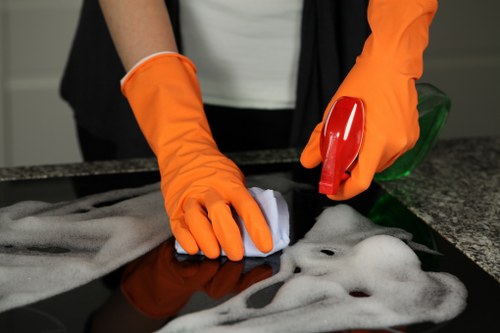
Management is responsible for providing safe systems of work, suitable training, and effective supervision. In turn, cleaners must follow instructions, use equipment correctly, and stop work if a situation appears unsafe. All cleaning operatives are expected to wear suitable protective clothing where required and to use personal protective equipment in line with the task being performed. Health and safety for cleaners is strongest when everyone understands their role and acts consistently.
Training and Competence
 Training is essential to ensure that each cleaner understands the hazards associated with their work. New starters must receive induction covering emergency procedures, accident reporting, chemical handling, manual handling, and safe use of equipment. Refresher training should be provided when procedures change, when new products are introduced, or when performance indicates a need for additional support. Ongoing competence helps reduce error and reinforces safe behaviour.
Supervisors should monitor working practices and provide guidance where needed. Any cleaner who is unsure about a task must ask for clarification before continuing. Professional cleaning operations require careful judgement, and no one should feel pressured to work in an unsafe manner. Safe practice must always take priority over speed. Clear communication is also vital when jobs involve multiple staff, shared spaces, or occupied premises.
Risk Control in Day-to-Day Cleaning
The main hazards in cleaning work include wet floors, cluttered walkways, contact with substances, repeated lifting, and use of electrical equipment. To manage these risks, areas must be assessed before work begins and controlled using appropriate measures. Warning signs should be used where floors may become slippery, while cords and equipment must be positioned to avoid creating trip hazards. Safe cleaning practice begins with planning the task and preparing the work area properly.
Cleaning products must be stored, labelled, and used according to instructions. Staff should never mix chemicals unless specifically trained and authorised to do so. Protective gloves, eye protection, or other safeguards should be worn when required. All containers should remain secure, and unused products should be returned to storage after use. Cleaning risk management also includes ensuring that ventilation is adequate when using products that release vapours or odours.
Manual handling is another important concern. Staff should avoid lifting heavy loads alone where this can be prevented and should use trolleys or mechanical aids when available. Where lifting cannot be avoided, the task should be broken down into manageable parts and performed using proper technique. Cleaner wellbeing is protected when physical strain is reduced and safe movement is encouraged throughout the shift.
Equipment, Incidents, and Emergency Action
All cleaning equipment must be checked before use and removed from service if damaged or unsafe. Electrical items should be handled with extra care, kept away from moisture where appropriate, and used only in accordance with instructions. Any defect must be reported immediately. Safe use of equipment reduces the chance of injury and helps maintain reliable service standards.
Accidents, near misses, and dangerous occurrences must be reported as soon as possible so that action can be taken to prevent recurrence. Reporting is not about blame; it is about learning and improvement. Managers should investigate incidents, record findings, and make any necessary changes to work methods or supervision. Occupational safety in cleaning relies on transparent reporting and timely follow-up.
In an emergency, cleaners must remain calm, follow site procedures, and take reasonable steps to protect people from harm. This may include isolating hazards, alerting others, and leaving the area if conditions become unsafe. Fire safety, evacuation routes, and first aid arrangements should be understood by all staff before work begins. 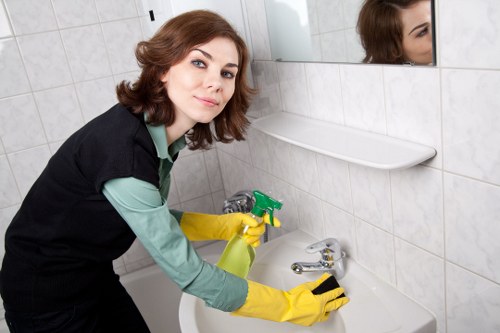 If a cleaner is injured or becomes unwell during a job, assistance should be sought immediately and the incident recorded according to procedure.
Review and Continuous Improvement
Health and safety arrangements must be reviewed regularly to make sure they remain effective. This includes checking training records, assessing incident trends, reviewing work instructions, and updating controls when risks change. Cleaning company safety policy should evolve alongside new equipment, new products, and changing work environments. A proactive approach helps prevent harm and strengthens service reliability.
Everyone involved in cleaning activities is expected to contribute to a culture of awareness, respect, and responsibility. By following safe systems, maintaining standards, and speaking up about concerns, the team supports a workplace where hazards are controlled and people are protected. Cleaners Kentish Town is committed to embedding safety into everyday practice so that every job can be completed with care, confidence, and professionalism. 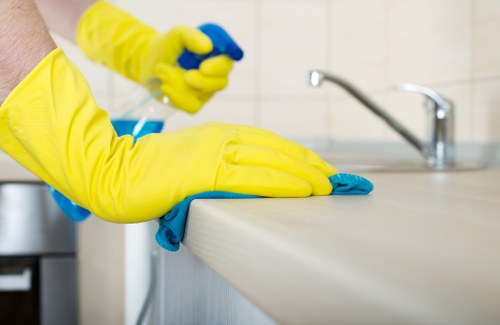 This policy applies to all cleaning tasks and forms an essential part of responsible working practice.